




RBI flags AI as defining force for Indian banking, calls for responsible adoption
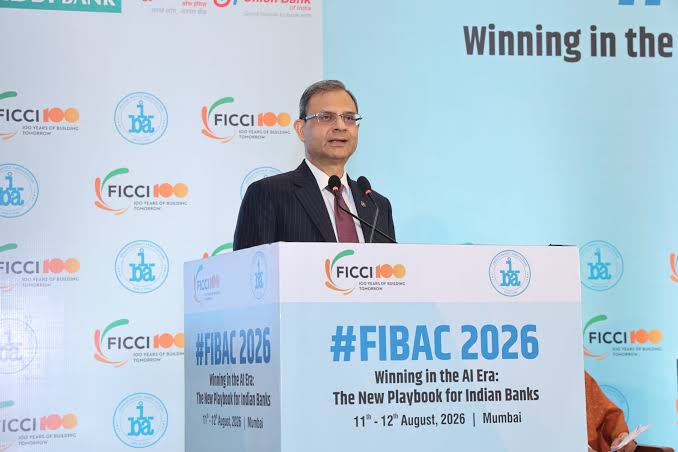
The Reserve Bank of India (RBI) has identified artificial intelligence (AI) as a defining force for the future of Indian banking, urging lenders to adopt the technology with a strong focus on governance, accountability, and risk management.
Speaking at the FIBAC 2026 conference, the central bank said AI will shape the current decade of banking as decisively as liberalisation and digitisation did in earlier eras.
The RBI outlined both the opportunities and risks associated with AI adoption, positioning it as a capability that must be “responsibly harnessed” rather than treated solely as a threat.
On the opportunity side, the central bank said AI could fundamentally change the economics of credit delivery by enabling lenders to assess borrowers using alternative data such as cash flows, GST filings, and digital footprints—particularly benefiting new-to-credit customers and small businesses.
It also pointed to improvements in customer service through AI-assisted relationship management, grievance redressal, and personalised financial guidance. The technology, it said, could play a significant role in advancing financial inclusion, including through voice-based interfaces in Indian languages.
Operational efficiency is another area where AI could deliver gains, with use cases ranging from document processing and reconciliation to regulatory reporting and internal audits. The RBI also noted that AI-powered systems could improve fraud detection by identifying anomalies in real time.
However, the central bank cautioned that these benefits come with significant risks that banks must address proactively.
Among the key concerns highlighted were the lack of transparency in AI decision-making, often referred to as the “black box” problem, and the potential for algorithmic bias that could lead to discriminatory outcomes in lending.
The RBI also flagged systemic risks arising from concentration, where multiple institutions rely on similar models or vendors, as well as growing dependence on third-party technology providers.
Data privacy and cybersecurity risks were identified as critical areas, particularly as AI systems require large volumes of data and may themselves become targets of adversarial attacks.
The central bank emphasised that accountability for decisions must remain with banks, regardless of the role played by AI systems.
“The model decided can never be an acceptable answer,” the RBI said, underlining the need for human oversight and explainability in AI-driven processes.
To manage these risks, the RBI outlined expectations for banks, including maintaining an inventory of AI systems, establishing board-approved governance frameworks, ensuring explainability in customer-impacting decisions, and conducting regular stress testing of AI models.
The central bank said its approach to AI regulation would remain principles-based and proportionate, allowing flexibility for institutions of different sizes and capabilities while ensuring safety and stability.
It also reiterated its commitment to supporting innovation through initiatives such as regulatory sandboxes and shared digital infrastructure.
The RBI’s stance comes as Indian banks accelerate investments in AI to improve efficiency, expand credit access, and enhance customer experience, even as regulators globally grapple with balancing innovation and risk.