

Odisha Signs Agriculture MoUs with Heifer International, Tatwa Technologies
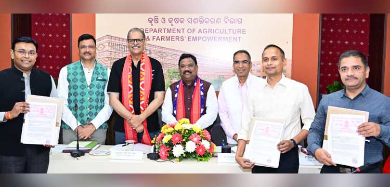
Odisha agriculture MoUs with Heifer International and Tatwa Technologies mark a major push to modernise crop value chains and digital advisory services for farmers.
Bhubaneswar: The Department of Agriculture & Farmers’ Empowerment (DAFE), Government of Odisha, has signed two major Memoranda of Understanding (MoUs) to accelerate agricultural development and enhance digital service delivery for farmers. These agreements are expected to modernise crop value chains, improve farmer incomes, and deepen the reach of technology-driven advisory services across the state.
The first MoU was signed between DAFE and Heifer International to support value chain development for ginger, turmeric, and millets (Shree Anna) in Odisha. Through this partnership, the state aims to promote scientific cultivation, improve processing infrastructure, and expand market linkages for farmers engaged in these high-value crops. The initiative is designed to raise farmer income, enable quality-based pricing, and build a strong ecosystem for natural and indigenous produce.
Officials said the collaboration will focus on training farmers, strengthening producer groups, and creating efficient supply chains that connect rural communities with domestic and international markets. The move is aligned with the government’s larger objective of diversifying agriculture and promoting climate-resilient crops such as millets.
The second MoU was executed between the Department of Agriculture & Farmers’ Empowerment, the Department of Fisheries & Animal Resources Development (FARD), and Tatwa Technologies Ltd. to manage and operate the state’s mobile-based digital extension service, Krushi Samrudhi Helpline. This platform is a key component of Odisha’s digital agriculture transformation and is designed to bring real-time advisory services to farmers at the grassroots level.
These Odisha agriculture department MoUs are part of the state’s broader push toward climate-resilient and technology-led farming.
The agreement aims to strengthen operations, ensure timely and accurate crop, livestock, and weather advisories, and create an open, farmer-centric extension ecosystem. By integrating digital tools with field-level data, the platform will support informed decision-making, reduce farm risks, and help farmers adapt to changing climatic and market conditions.
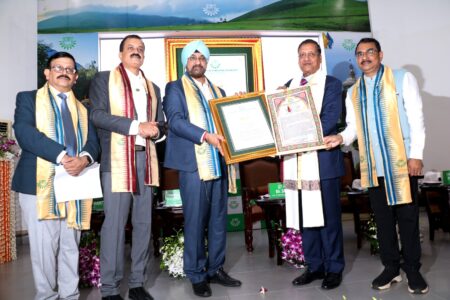
The Odisha agriculture department MoUs were signed in the presence of Deputy Chief Minister and Minister of Agriculture & Farmers’ Empowerment and Energy, Kanak Vardhan Singh Deo, along with FARD & MSME Minister Gokulananda Mallik. The ministers highlighted how both partnerships reflect the state government’s commitment to inclusive agricultural growth, technology adoption, and improving farmer welfare.
Deputy Chief Minister Singh Deo said the agreements will “help us reach the unreached and provide timely assistance to farmers during their need.” He added that enhancing both value chain development and digital advisory systems is crucial for ensuring long-term agricultural resilience.
FARD Minister Mallik noted the significant impact of real-time livestock advisories delivered through the Krushi Samrudhi platform. He said the service has been particularly helpful to farmers and rearers, offering actionable information that protects livelihoods and improves productivity.
Principal Secretary, Agriculture & Farmers’ Empowerment, Dr. Arabinda Kumar Padhee, detailed the scale of the Krushi Samrudhi Helpline. He said the toll-free advisory service currently supports over 80 lakh farmers and provides guidance on 70 crop types, 11 livestock categories, and three fisheries practices. Since its inception, the platform has delivered more than 95 crore crop advisories, over 40 crore livestock advisories, 5 crore fisheries advisories, and over 26 crore weather and scheme-related messages.
Senior officials from the Agriculture, Horticulture, Soil Conservation, Fisheries, and Animal Husbandry departments, along with representatives from Heifer International and Tatwa Technologies, attended the signing ceremony. The partnerships are expected to unlock new opportunities for farmers, strengthen rural livelihoods, and drive Odisha toward a more resilient and tech-enabled agricultural future.