

Odisha Signs Multiple MoUs to Boost Bamboo and Herbal-Based Livelihoods
State partners with top national and global institutions to strengthen research, design, cultivation, and market access
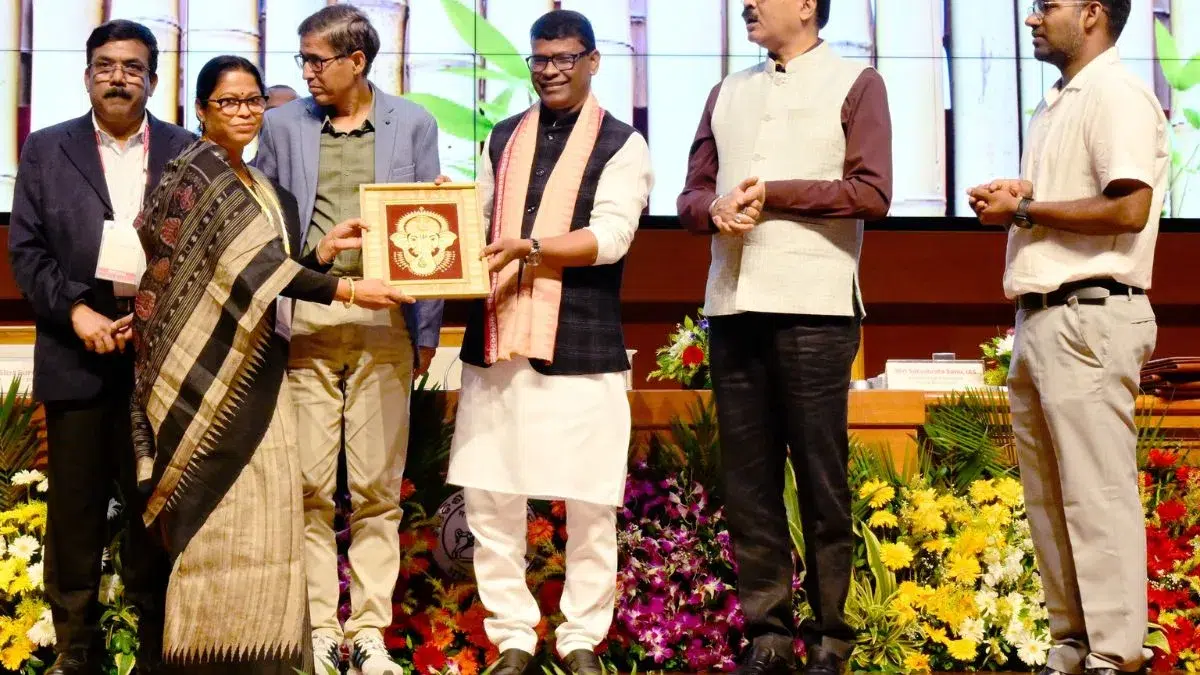
Bhubaneswar: The Odisha government has taken a major step toward strengthening community livelihoods in the bamboo and herbal sectors by signing several key Memorandums of Understanding (MoUs) with leading national and international institutions. The agreements were formalised during the National Conference on Bamboo and Medicinal Plants held in Bhubaneswar, reflecting the state’s growing focus on sustainable natural-resource-based economies.
The Odisha Bamboo Development Agency (OBDA) signed MoUs with the Kerala Forest Research Institute (KFRI), International Bamboo and Rattan Organization (INBAR), and National Institute of Design (NID). Similarly, the State Medicinal Plant Board (SMPB) entered into partnerships with the Foundation for Revitalisation of Local Health Traditions (FRLHT), M.S. Swaminathan Research Foundation (MSSRF), and the Institute of Rural Management Anand (IRMA). Officials said these collaborations aim to accelerate scientific research, expand design innovation, conserve traditional plant resources, and improve the commercialization pipeline for herbal products.
Adding a digital boost to the sector, the state launched the “Odisha Bamboo Haat” website, a dedicated platform to promote and market bamboo products online. The initiative is expected to help artisans, SHGs, and bamboo growers access wider markets and improve earnings.
The national conference, attended by senior officials, technical experts, industry leaders, and community organisations, centred on building viable and sustainable livelihood pathways for communities dependent on bamboo and medicinal plants. Discussions highlighted Odisha’s unique potential in both sectors due to its diverse forest landscapes and rich traditional knowledge systems.
The event began with a welcome address from K. Murugesan, Project Director of the Odisha Forestry Sector Development Project (OFSDP). This was followed by a detailed presentation of the State Vision Plan for Bamboo and the roadmap for the State Medicinal Plants Board by V. Karthick. His presentation outlined Odisha’s strategy for conservation, scientific cultivation, value addition, and stronger market integration to support long-term sectoral growth.
Highlighting the importance of natural resource management, Principal Chief Conservator of Forests and Head of Forest Force (PCCF & HoFF) Suresh Pant delivered the Guest of Honour address. He stressed the need for scientific interventions and improved market linkages to uplift forest-dependent communities. Additional Chief Secretary Satyabrata Sahu, in his Special Address, reiterated the state’s commitment to bringing innovation, research partnerships, and community empowerment under a unified framework.
Forest and Environment Minister Ganesh Ram Singhkhuntia, addressing the gathering, said Odisha is working to position itself as a national leader in bamboo-based livelihoods and herbal product development. He noted that the MoUs signed mark an important step in creating long-term, sustainable economic opportunities for rural and tribal communities.
The technical sessions during the event featured presentations and panel discussions by experts from KONBAC, KFRI, INBAR, URAVU, CGBMT, Common Ground, Vindhya Herbals, TNMPHC, and Chhattisgarh Herbs. The discussions covered a wide range of themes, including sustainable bamboo construction, innovative product design, best practices in medicinal plant cultivation, value chain strengthening, and market-driven livelihood models.
The conference concluded with an interactive open discussion and closing remarks that reaffirmed Odisha’s dedication to building an ecosystem where bamboo and herbal sectors can flourish through community participation, scientific support, and modern market linkages.
With these strategic partnerships and a renewed policy thrust, Odisha aims to transform its bamboo and medicinal plant sectors into engines of rural prosperity and ecological sustainability.