




Supreme Court Gives Odisha March 2026 Deadline to Recover ₹2,700 Crore From Illegal Mining Dues
Eight years after landmark verdict, apex court warns State over slow recovery and orders High Court to fast-track stalled cases
Bhubaneswar: In a major push for accountability, the Supreme Court has directed the Odisha government to complete the recovery of more than ₹2,700 crore in illegal mining penalties by March 3, 2026. The apex court expressed strong displeasure over the State’s slow progress, noting that even eight years after its historic 2017 judgment, the pending dues remain largely unrecovered.
The Court issued sharp remarks during the latest hearing, calling the delay “serious and unacceptable.” Many recovery proceedings have been stuck for years due to interim stay orders granted by the Orissa High Court.
To break the long-standing deadlock, the Supreme Court has instructed the Chief Justice of the Orissa High Court to form a special, dedicated bench. This bench will exclusively hear all cases where recovery has been halted due to stay orders.
If final judgments cannot be delivered quickly, the High Court must at least decide on the State’s applications seeking to vacate those stays. The Supreme Court made it clear that pending stays should not be used as a loophole to delay compliance with its earlier orders.
According to the bench, the long delay not only affects the enforcement of its verdict but also raises wider concerns about governance, transparency, and the management of mineral resources in Odisha.
Over ₹2,700 Crore Still Unrecovered Since 2017
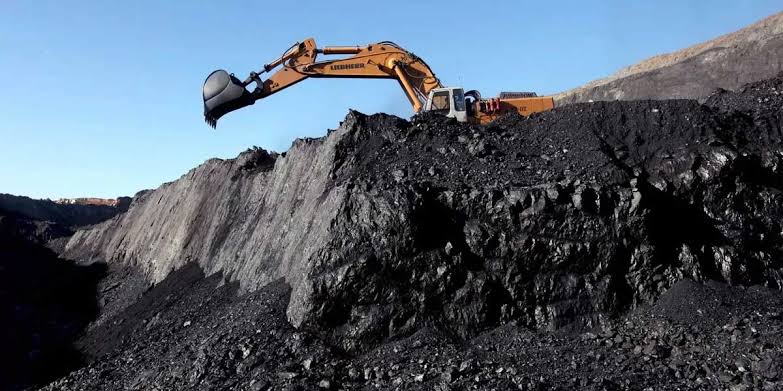
The unrecovered amount traces back to the Supreme Court’s 2017 ruling, which found that 215.5 million tonnes of iron and manganese ore had been illegally extracted between 2000–01 and 2010–11. The total value of the illegally mined ore was estimated at ₹17,500 crore.
The Court had ordered 102 mining leaseholders to pay compensation. Yet, Odisha’s latest status report submitted on October 29 revealed that over ₹2,700 crore is still pending.
The Supreme Court criticised the “mode and manner” of recovery, observing that the State has not acted with the urgency required for such a major violation of law and public revenue.
The apex court’s frustration is not new. In January 2025, the Odisha government informed the Court that ₹2,721.65 crore remained pending. Many mining companies have managed to avoid payment by securing interim stay orders from the High Court, causing long delays.
The Supreme Court’s latest directive aims to finally resolve the issue by ensuring that the High Court handles these cases on priority, preventing further financial loss to the State.
While major illegal mining dues remain stuck, Odisha has intensified enforcement in minor mineral cases. As per data presented in the State Assembly last week:
- ₹126 crore in fines were collected between 2022 and October 2025
- 15,187 seizures were made
- 3,219 cases were registered for illegal extraction and transport of minor minerals
Eleven tehsils have been identified as illegal sand mining hotspots, prompting stricter surveillance. Revenue from the mining sector has improved too, with the State collecting ₹655 crore between April and September of the current financial year.
New Rules to Strengthen Mineral Governance in Odisha**
In November, the Odisha Cabinet approved a major update to its mining regulations by introducing the Odisha Minerals (Prevention of Illegal Mining and Regulation of Trading, Transportation & Storage) Rules, 2025.
This overhaul replaces the older 2007 rules and comes after a CAG report highlighted losses of ₹22,392 crore between 2015 and 2022 due to irregularities and poor monitoring.
Key reforms under the 2025 rules include:
- Drone-based surveillance of mining areas
- Scientific sampling to prevent misreporting of minerals
- E-lottery system for minor mineral leases
- Limits on the number of quarries one individual can operate
Officials say these changes will create a transparent, technology-driven system for monitoring and managing Odisha’s mineral resources.
The Supreme Court’s March 2026 deadline marks a turning point in the long-running battle to recover illegal mining dues. With a dedicated High Court bench likely to be set up soon, Odisha will face intense pressure to accelerate all pending cases.
If the High Court vacates the stays or delivers final judgments within the timeline, the State can move ahead with long-delayed recovery actions against defaulting mining leaseholders.
The next 15 months will be crucial. The Supreme Court’s order sends a clear message: the implementation of its 2017 verdict can no longer be delayed. It also signals the need for stronger governance, better enforcement, and more accountability in Odisha’s mining sector.
As Odisha enters a decisive phase in its fight against illegal mining, all eyes will be on the State’s ability to meet the March 2026 deadline and recover the massive dues owed to the public.