


Odisha Government Announces Major Steps to Resolve Tribal Issues in Malkangiri
Decisions focus on land rights, rehabilitation, education, irrigation and livelihoods after recent unrest
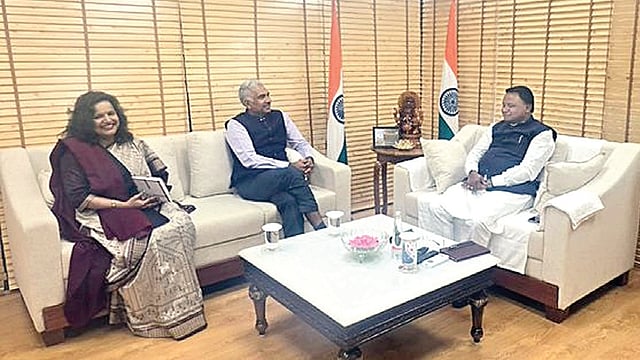
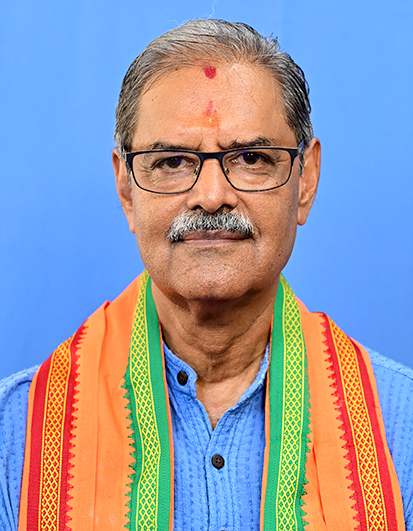
Bhubaneswar : The Odisha government has announced a series of key decisions to address long-pending problems faced by tribal communities in Malkangiri district. The announcements were made on Thursday by Deputy Chief Minister Kanak Vardhan Singh Deo, days after violence was reported in the district last month.
Singh Deo had earlier visited Malkangiri to review the ground situation and interact with local residents. Based on the findings, the state government has now laid out a comprehensive action plan covering land rights, rehabilitation, irrigation, education and livelihood support for tribal families.
Focus on Resolving Tribal Land Disputes
One of the major steps announced is the regular review of pending tribal land cases. The District Collector of Malkangiri has been directed to review all pending cases under Regulation 2/56 every fortnight and submit progress reports to the Revenue Divisional Commissioner (Southern Division) and the state government.
Regulation 2/56, also known as the Odisha Scheduled Areas Transfer of Immovable Property Regulation, 1956 (amended in 2002), is meant to protect tribal land from being transferred to non-tribals. However, thousands of such cases remain unresolved across the state due to procedural delays. The government hopes that strict timelines will speed up justice for affected tribal families.
Permanent Land Titles for Landless Tribal Families
To address land insecurity among landless and homeless tribal families, the government has announced fast-track issuance of permanent land titles. Pattas will be provided under the Forest Rights Act (FRA) and the Odisha Government Land Settlement (OGLS) Act.
The District Collector will conduct monthly reviews of patta distribution and report the progress to the state government. This move is expected to bring long-term security and stability to tribal households dependent on forest and agricultural land.
Rehabilitation of Machhkund Project Displaced Families
The Deputy Chief Minister also announced steps to resolve the long-standing rehabilitation issues related to the Machhkund Irrigation Project. The project, built in the 1950s jointly by Odisha and Andhra Pradesh, displaced several tribal families, many of whom are still awaiting proper rehabilitation.
Permanent land pattas will be issued to displaced families. The Revenue and Disaster Management Department, in coordination with the Water Resources Department, has been asked to prepare a long-term rehabilitation plan to finally settle the issue.
Stronger State-Level Monitoring
To ensure accountability, the Additional Chief Secretary of the Revenue and Disaster Management Department will conduct quarterly reviews of all revenue-related issues in Malkangiri. The findings will be submitted directly to the state government for follow-up action.
This move is aimed at preventing delays and ensuring that decisions taken at the district level translate into real benefits on the ground.
Irrigation Support for Tribal Farmlands
Recognising the importance of agriculture for tribal livelihoods, the government has directed the Water Resources Department to provide irrigation facilities to upland agricultural lands located near reservoirs and water bodies.
This step is expected to improve farm productivity, reduce dependence on rain-fed agriculture and enhance food security in the region.
Improved Access to Livelihood Schemes
The state government has also announced measures to ensure better access to livelihood schemes for tribal communities. Officials have been directed to facilitate benefits under schemes such as the Chief Minister’s Agriculture Development Scheme, Prime Minister’s Employment Generation Programme (PMEGP) and Prime Minister Formalisation of Micro Food Processing Enterprises (PMFME).
These schemes aim to promote self-employment, small businesses and value addition in agriculture, helping tribal youth and families generate sustainable income.
Filling Vacant Teacher Posts in Tribal Languages
Addressing education gaps in tribal areas, the government has decided to immediately fill vacant Multilingual Education (MLE) teacher posts. Teachers for primary schools imparting education in Koya, Didayi and Bonda tribal languages will be recruited without delay.
The School and Mass Education Department has been instructed to take urgent action, ensuring better learning outcomes and reduced dropout rates among tribal children.
Commitment to Tribal Welfare in Malkangiri
Deputy Chief Minister Singh Deo said the government is committed to resolving long-pending tribal issues through focused governance, regular monitoring and timely execution. The decisions aim to restore trust, promote development and ensure social justice in one of Odisha’s most sensitive tribal districts.
The state government believes that these measures will help prevent future unrest and pave the way for inclusive growth in Malkangiri.