



CAG Flags Irregularities in Odisha’s Tribal Development Agencies
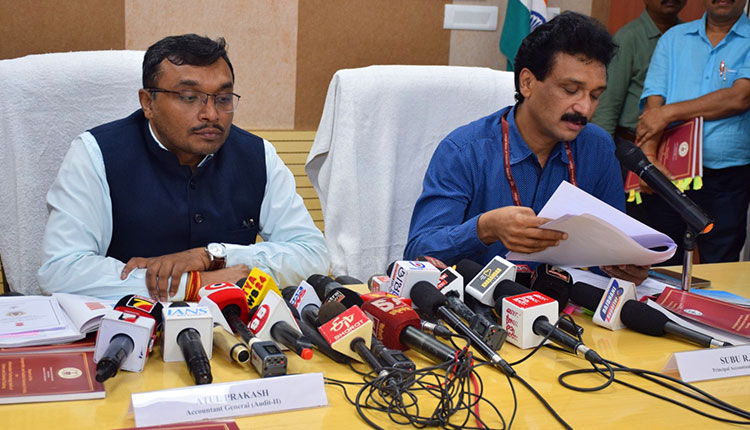
Audit reveals suspected fund misuse, poor spending efficiency, and lack of accountability in ITDA operations
Bhubaneswar: The Comptroller and Auditor General (CAG) of India has uncovered large-scale irregularities in the functioning of Odisha’s Integrated Tribal Development Agencies (ITDAs), institutions that play a crucial role in delivering welfare schemes, services, and infrastructure for Scheduled Tribes. The findings, tabled in the Odisha Assembly, paint a troubling picture of financial mismanagement, suspected fund diversion, and poor oversight mechanisms.
According to the audit report, ITDAs have failed to utilize available resources effectively. Between 2018 and 2023, out of ₹1,709.47 crore available with 11 sampled ITDAs, only ₹1,190.44 crore — about 70 percent — was actually spent. Even more concerning, none of the ITDAs had prepared Annual Accounts as mandated under the Societies Registration Act. The absence of systematic accounting practices has raised questions about transparency and accountability in handling tribal welfare funds.
One of the most alarming revelations was the misuse of ITDA funds by junior-level engineers and officials. The audit noted that Junior Engineers (JEs) and Assistant Engineers (AEs) carried out personal transactions worth ₹148.75 crore directly from ITDA bank accounts. These included ATM withdrawals, cheque payments, mobile recharges, UPI transactions, and even payment of insurance premiums — expenditures with no connection to developmental work. The CAG observed that such practices were “indicative of suspected misappropriation” and reflective of weak internal controls.
The CAG also flagged irregularities in expenditure documentation. In nine ITDAs that were scrutinized, vouchers worth only ₹17.33 crore were available against reported expenditure of ₹20.71 crore, leaving significant gaps in financial records. In a separate check of 325 works, payments totaling ₹3.23 crore were made despite missing invoices.
The audit also reviewed 2,476 invoices related to 544 works and found glaring deficiencies, including missing dates, missing invoice numbers, duplicate entries, purchases from unregistered entities, and mismatched GST details. Such lapses not only undermine the credibility of expenditure but also raise red flags about possible collusion and falsification of records.
The audit further highlighted violations of procurement rules. Ten ITDAs collectively purchased materials worth ₹54.25 crore from cooperative societies without inviting tenders, thereby bypassing the competitive bidding process. This practice not only denied opportunities for fair competition but also raised concerns about inflated pricing and favoritism.
A specific case of serious deviation was found in ITDA Paralakhemundi. The Project Administrator there exceeded approval limits by procuring musical instruments and costumes worth ₹3.74 crore against a sanctioned amount of only ₹73.60 lakh. Of this, ₹2.09 crore was spent through repeat orders without floating fresh tenders — a direct violation of financial norms.
The findings have sparked fresh debate about the governance and oversight of ITDAs, which are meant to be the backbone of tribal development in Odisha. Experts point out that while the state has allocated significant funds to uplift tribal communities, weak monitoring mechanisms and unchecked discretionary powers have diluted the impact of these schemes.
The CAG report is expected to trigger a political debate in the Assembly, with the opposition likely to target the government for failing to safeguard funds meant for marginalized communities. It also puts pressure on the state to strengthen auditing systems, enforce accountability, and ensure that developmental funds reach the intended beneficiaries.
The audit underscores the urgent need for reforms in financial governance of ITDAs. Establishing strict monitoring mechanisms, mandating annual accounts, enforcing transparent procurement procedures, and introducing digital tracking of expenditures are some of the measures suggested by experts. Unless corrective steps are taken, funds meant to uplift Odisha’s tribal communities may continue to be vulnerable to leakages and misuse.