Landmark MoUs, Puri Declaration Shape India’s Clean-Energy Future at GELS 2025
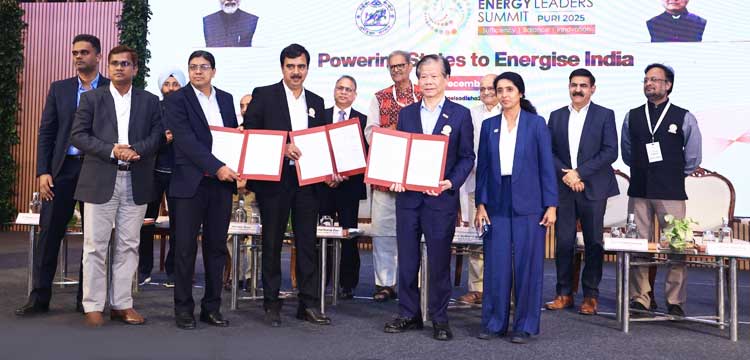
The two-day Global Energy Leaders Summit in Odisha brings states, industry, and global experts together for India’s first COP-style coordination platform, leading to key MoUs and the draft Puri Declaration.
Bhubaneswar: India marked a significant milestone in its national clean-energy journey as the Global Energy Leaders Summit (GELS) 2025 concluded in Puri, Odisha. Positioned as India’s first COP-style platform for interstate energy coordination, the two-day event brought together policymakers, industry leaders, global experts, and researchers for high-level dialogue on the future of clean energy. The closing press briefing was addressed by Odisha Deputy Chief Minister Kanak Vardhan Singh Deo, Energy Principal Secretary Vishal Dev, and Tony Blair Institute Country Head Vivek Agarwal.
The Summit hosted structured closed-door discussions, technical deep dives, and thematic panels centered on the most urgent issues facing India’s energy transformation. Key areas of focus included AI-led grid security, carbon markets, advanced financing models, clean-tech innovation, and much-needed institutional reforms. Collectively, these conversations laid the foundation for a long-term collaborative framework that aims to guide India toward a secure, resilient, and innovation-driven clean-energy future.
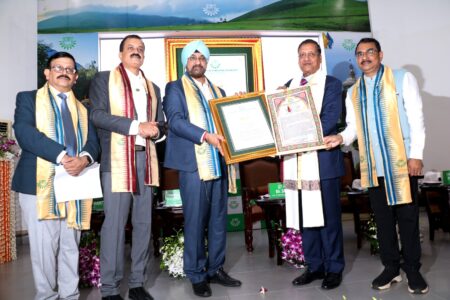
A major outcome of GELS 2025 was the signing of four strategic Memorandums of Understanding designed to accelerate clean-energy research, pilot projects, and infrastructure development in Odisha. The first agreement, a trilateral MoU between Nanyang Technological University Singapore, GRIDCO, and IIT Bhubaneswar, aims to develop advanced renewable-energy pilot projects and applied research programs. This partnership is expected to support next-generation innovations in solar, storage, and grid optimisation.
In another crucial step, GRIDCO, ReNew, IIT Bhubaneswar, and Avaada announced a collaborative effort to establish a Green Hydrogen Centre of Excellence in Odisha. This initiative will support research, demonstrations, and capacity-building aligned with India’s push for green hydrogen leadership. A third MoU, signed by NLC India Renewables Ltd, OREDA, and GEDCOL, paves the way for joint renewable-energy development across the state. The fourth agreement between SECI, OHPC, GEDCOL, and OREDA focuses on enabling integrated planning and accelerating renewable-energy deployment.
The Summit also witnessed the presentation of the draft Puri Declaration, a landmark document informed by discussions at GELS and shaped with inputs from the Union Power Ministry and the Ministry of New and Renewable Energy. The draft has been circulated to all states for consultation, aiming to build an inclusive framework co-authored by national and state-level energy institutions. Expressing optimism, Deputy Chief Minister Kanak Vardhan Singh Deo said the declaration symbolizes “a collective acknowledgment that no state can progress alone and our collective promise that none will have to.”
NITI Aayog CEO B.V.R. Subrahmanyam praised Odisha for hosting a summit of such scope and urged that it be held annually. He emphasized that participation will expand as states recognise the value of a collaborative, solutions-driven platform. Echoing this sentiment, Principal Secretary Vishal Dev noted that GELS revealed a strong appetite among states for coordinated action and agreed frameworks, especially on long-term reforms.
Sustainability remained a core theme throughout the event. GELS 2025 was conducted under ISO 20121 guidelines for sustainable event management, and its carbon footprint—calculated at 45.33 tonnes of CO₂ including international travel—has been fully neutralised. This was achieved through the plantation of 1,130 trees in Nuapada, making it Odisha’s first major carbon-neutral conference. The initiative highlights the Summit’s commitment to leading by example in India’s energy transition.
As the Summit concluded, leaders reiterated that the Puri Declaration will now act as a guiding framework for ongoing working groups, interstate coordination, and annual reviews. With Odisha taking the lead, India is positioned to advance a unified, collaborative clean-energy transformation aligned with its long-term development goals and Net Zero ambitions.