


Odisha Accelerates Railway Expansion to Boost Connectivity and Heritage Tourism
State reviews key projects including Puri–Konark heritage corridor, KBK region links, and hinterland connectivity
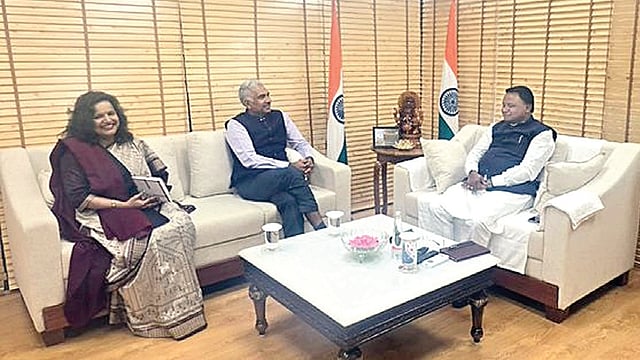
Bhubaneswar: In a significant step towards strengthening Odisha’s role in India’s railway network, Development Commissioner-cum-Additional Chief Secretary Anu Garg chaired a high-level review meeting on railway infrastructure and ongoing projects. The meeting brought together top officials, including Usha Padhee, Principal Secretary of Commerce & Transport, P. Funkual, General Manager of East Coast Railway, Premkumar Jha, Principal Chief Conservator of Forests, Balwant Singh, Commissioner-cum-Secretary Tourism, and other senior representatives.
Odisha has emerged as a frontrunner in railway development by facilitating swift land acquisition, ensuring environmental and statutory clearances, and co-financing priority projects with the Centre. The discussions underscored the state’s commitment to leveraging railway expansion as a driver of connectivity, tourism, and economic growth.
Among the flagship initiatives under review was the 32 km Puri–Konark new railway line, sanctioned at a cost of ₹492.12 crore. This landmark project will connect two UNESCO World Heritage Sites — the Shri Jagannath Temple in Puri and the Sun Temple in Konark. The proposed corridor will feature four stations, multiple bridges, and event-specific passenger facilities. Officials estimate that the project will generate around 11 lakh man-days of work, offering direct employment opportunities while also boosting livelihoods through the “One Station One Product” scheme. Beyond connectivity, the line is expected to emerge as a spiritual and heritage tourism corridor, drawing both domestic and international visitors.
The review also highlighted Odisha’s strategy to strengthen regional links. In Mayurbhanj, three new projects — Bangriposi–Gorumahisani, Badampahar–Kendujhargarh, and Buramara–Chakulia — are set to link North Odisha with the western region. These will enable seamless end-to-end connectivity from Betnoti to Rairangpur, unlocking new opportunities for trade and mobility.
Similarly, the Jaleswar–Chandaneswar line along the coast is being developed with a focus on tourism. The project is expected to enhance access to coastal attractions, promote local handicrafts, and support sustainable livelihood options for coastal communities.
Special emphasis was placed on the KBK (Kalahandi–Balangir–Koraput) region, long considered one of Odisha’s most underdeveloped zones. New railway lines between Gunupur–Therubali, Junagarh–Nabarangpur, and Malkangiri–Pandurangapuram (via Bhadrachalam) are planned to provide direct links from Raipur to Vijayawada and Hyderabad. These connections will not only improve passenger mobility but also support agro-based industries, enhance market access for tribal produce, and open fresh avenues for eco-tourism in tribal belts.
The meeting also reviewed progress on the Khurda Road–Balangir line, a long-pending project that will enhance hinterland connectivity, and the Bargarh Road–Nawapara Road line, designed to support rice-producing belts in western and southern Odisha. This latter route is projected to reduce logistics costs significantly and provide an alternative coal transport corridor from Angul/Talcher to Raipur, thereby minimising coal dust pollution along existing routes.
During deliberations, officials stressed the importance of expediting land acquisition, sustainable project planning, and integrating tourism with logistics to ensure holistic development. The state government reaffirmed its commitment to swiftly resolving bottlenecks and accelerating project execution so that benefits can flow across industries, communities, and regions.
The meeting ended with a consensus that Odisha’s railway expansion is not merely about laying tracks but about weaving together connectivity, economic opportunity, and cultural pride. With heritage projects, regional links, and industry-focused corridors, the state is on course to redefine its role in India’s transport and tourism map.